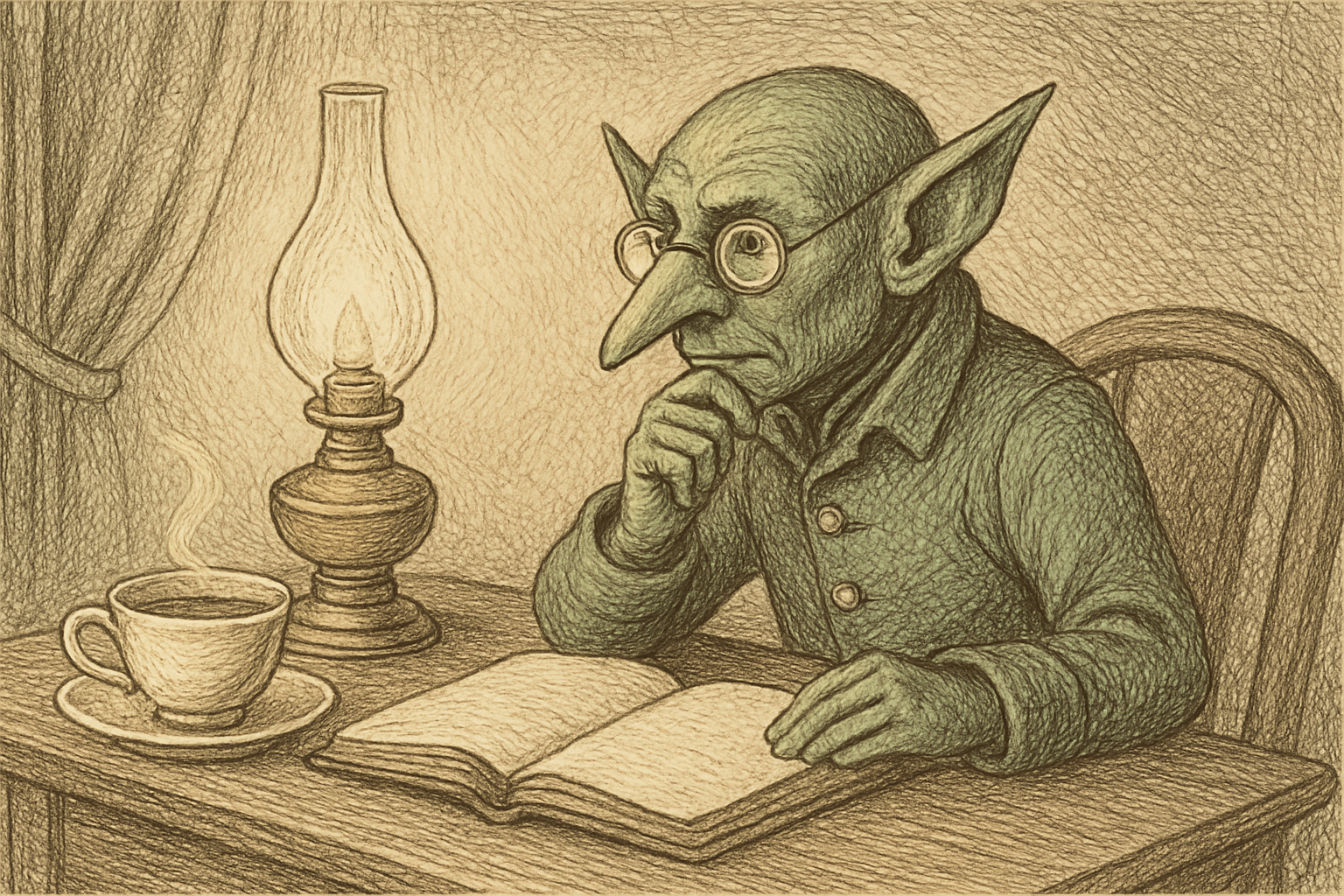
The Goblin is asked this question approximately once a fortnight. The honest answer is: it depends, and the conditions are unusually clear. Most shopkeepers who blog should not be blogging. A minority of shopkeepers who do not blog should be.
Here is how to know which you are.
The case against a shop blog (the usual case).
A blog is a content commitment. If you cannot publish at least once a fortnight, consistently, for at least a year, the blog will hurt your shop more than help it. Why: an abandoned blog is read by Google as a signal that the shop is not maintained. A shop that is not maintained is less trustworthy. Less trustworthy shops rank lower. The half-finished blog is, in this sense, worse than no blog.
The Goblin has audited dozens of small shops with blogs whose last post is from 2022. Each time the conclusion is the same: delete the blog, or unindex it. The half-attempt is doing harm.
The case for a shop blog (the unusual case).
A blog is genuinely worth keeping if all three of the following are true.
- You have something specific to say. Not “Top 10 Reasons to Love Beeswax Candles”; that is content-mill content and the Goblin can spot it at twenty paces. Something specific: the maker’s process, the sourcing decisions, the seasonal cadence, the reason your prices are what they are. Things only you can write.
- Your customers ask repeated questions you can answer in writing. If five customers a month email asking “is the wax food-safe,” a blog post titled “Is beeswax food-safe?” will rank, save you replies, and earn quiet trust.
- You can publish at least twice a month for a year before assessing. The blog earns its keep slowly. If you cannot commit to the cadence, the blog is not for you, and you would be better served by improving your product pages.
If all three are true, a blog is one of the highest-return investments available to a small shop. If any of the three is false, the blog will mostly absorb the time you ought to be spending on the shop itself.
What to write about, if you do blog.
The Goblin suggests, in order of usefulness:
- Customer questions, answered. Each repeated question becomes a post. Each post links to the relevant products. Each post titles itself with the literal question.
- How-to-use posts. “How to season a wooden chopping board.” “How to refill a fountain pen.” Practical. Useful. They rank for the exact phrases customers search for.
- The maker’s process. Not in the editorial-magazine sense. In the practical sense: how long, what materials, where they come from. These posts build trust and convert better than any other marketing channel the Goblin has measured.
- Seasonal updates. Twice a year, write a post on what is in stock, what is new, what is being discontinued. These posts have short useful lives but capture the customers who return.
What not to write about.
- SEO topics, unless SEO is your product. Your customers do not need your opinions on Core Web Vitals.
- Top-ten lists. Google has been wise to these since 2012; they no longer rank well, and they make the blog feel cheap.
- News pegs. A blog post about a current event is dated by next month and worthless by next year.
The Goblin’s overall verdict: most small shops should not have a blog, and the absence of one is not a failure. The minority who do should treat it as a slow-burning content garden, planted with the questions their customers actually ask. If you commit to it for a year, it will, quietly, be among the best things you have done.
If you would like a frank verdict on whether yours falls into the “keep” or “delete” column, commission the Goblin. He has, on this particular topic, no shortage of opinions.
— The Goblin, who blogs sparingly, and notices.